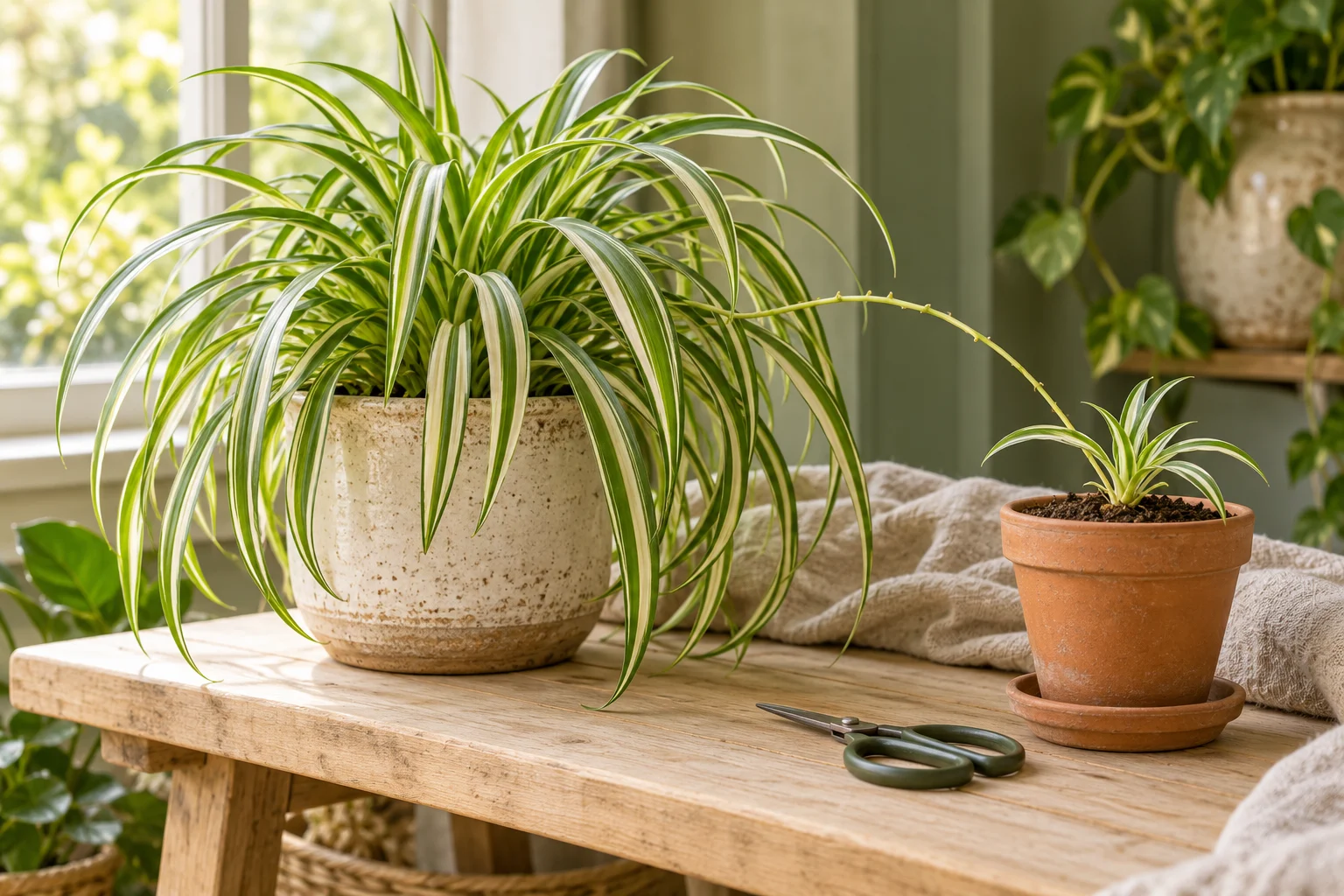
A large spider plant puts on a small show of its own: leaves fall in green ribbons, while young rosettes hang from long stems. One of them already looks almost independent. Set a small pot nearby and let its roots settle in while the connecting stem remains attached to the parent.
This is Chlorophytum comosum, the familiar houseplant with narrow, arching leaves. Its daughter rosettes can develop their own roots and become separate plants. Begin by making a little space beside the parent pot.
Choose a well-grown plantlet
Look at the rosettes along the slender stem. A well-grown plantlet with several unfolded leaves makes a useful starting point. You may see short roots at its base. Choose healthy-looking, firm foliage.
Leave the rosette attached while preparing its pot. It can root beside the parent with that connection intact. In the wild, the long stem helps a plantlet reach the ground. At home, a small container takes the place of that patch of earth.
Put a small pot next door
Prepare a clean container with drainage holes and a loose houseplant potting mix. A small rosette does not need a large volume of wet compost around it. Moisten the mix beforehand and let excess water drain.
Position the new pot so the plantlet’s base rests comfortably on the surface. Raising the small container a little, or moving the parent pot, may make this easier. Keep the connecting stem relaxed so it does not pull the young rosette out of place.
Gently settle the base on the mix and guide any existing roots into it. Keep the leaves and the centre of the rosette above the surface. If the plantlet moves, a small U-shaped wire pin beside its base can hold the connecting stem against the mix and steady the arrangement.
Light, warmth and a little attention
Choose bright, indirect light and steady warmth. Strong, direct sunshine is unnecessary for this young planting. A dim autumn window may benefit from supplemental light for houseplants.
Check the mix in the small pot. Keep it moderately moist and allow water to drain freely. The parent and the plantlet occupy different containers, so their watering needs may not fall on the same day. Check each pot separately.
Write the planting date on a simple label. Later, it will be easier to remember when you set the pot in place and how the little rosette has changed.
When to cut the connecting stem
Give the plantlet time to root. Once it holds in the mix and offers slight resistance to a very gentle tug, cut the connecting stem with clean scissors. Check carefully, without trying to lift the plant from the potting mix.
The young spider plant can continue growing in its own container. Keep it in a bright position and watch the moisture. Once it is rooted, allow the mix to dry slightly before watering again, then let the excess drain away.
If someone gives you a detached plantlet with roots already present, you can pot it straight into a small container of moist mix. Settle the roots gently, keep the rosette above the surface, water and empty the saucer afterwards.
In time, a second fountain of leaves can grow beside the first. It takes up little space at the beginning, yet those familiar curves are already there. Keep it for your own shelf, or one day pass it to someone else who enjoys plants.