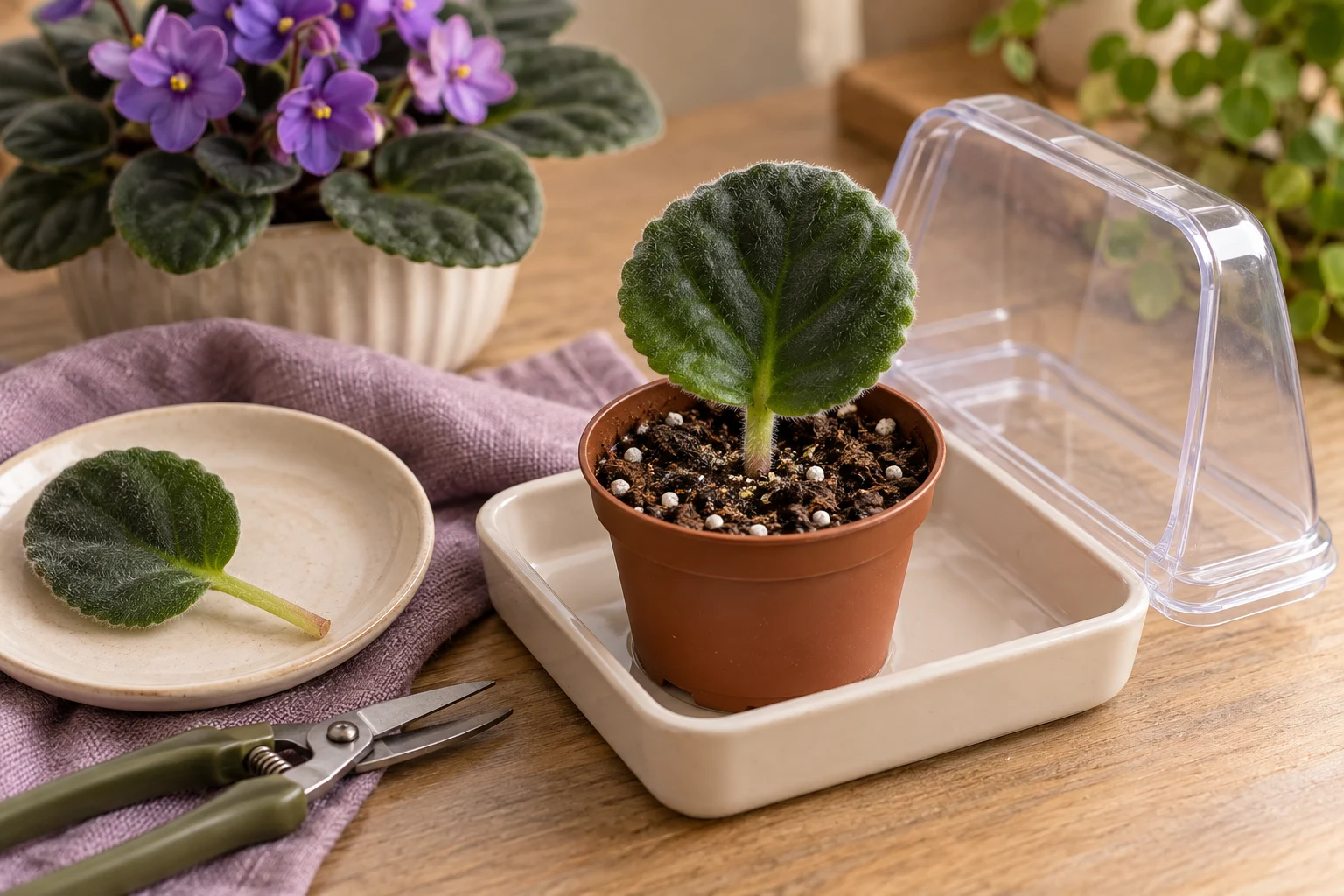
A flowering African violet invites a closer look: the folds of its petals, the soft edge of a leaf, the neat green rosette. Then comes an intriguing thought — grow another from a single leaf. A small pot fits on the table, and a quiet home project begins, with the most interesting early changes hidden beneath the surface.
African violets can form roots and new plantlets from a leaf cutting. Here we will start the leaf directly in potting mix. It gets a small place to grow, while we find a bright, warm spot and watch for changes.
Choose a good leaf to begin
Select a healthy plant and a leaf that has almost reached its usual full size. Look for a firm leaf without damage or visible signs of pests. Leave the very small, young leaves on the plant for now.
Cut the leaf with its stalk attached. This stalk, called the petiole, connects it to the rosette. Use a sharp, clean knife or small pair of scissors. When taking cuttings from different plants, clean the tool between cuts. Label a cutting with the plant's name if you know it: later, a familiar label is much nicer than trying to remember which violet it came from.
A small pot and an airy mix
Choose a clean, small container with drainage holes. The rooting medium needs to let both water and air through; a loose mix suitable for cuttings will do. Moisten it in advance and allow excess water to drain. Aim for a damp, open-textured mix rather than a heavy, waterlogged mass.
Make a small hole, insert the leaf stalk and gently settle the mix around it so the leaf stays upright. The base of the leaf can just touch the surface, but keep the leaf blade itself above the mix.
Set the pot on a saucer. If you add water after planting, let it drain and empty the saucer. The cutting now has a moist medium, with room for air around its future roots.
Bright light and a clear cover
A clear bag or small propagator helps keep the air around the leaf humid before roots form. Put the covered cutting in bright light away from strong direct sun, which can quickly overheat a small enclosed space.
Choose a spot with steady warmth, away from cold glass and draughts. In autumn, check it in the evening too: a comfortable daytime windowsill may become chilly after sunset. If the window is dim, supplemental light for houseplants can help you arrange a bright place for the cutting.
A cover still needs a little attention. Check the potting mix and ventilate the enclosure when needed. If the medium remains moist, it does not need more water yet. When watering is necessary, pour onto the mix, keeping the leaf dry, and remove excess water from the saucer.
When the surface looks unchanged
At first, the pot may look much as it did on planting day. This is when it is tempting to lift the cutting and look for roots. Leave it in place: delicate new growth may be forming below the surface.
Note the planting date and watch the leaf, the moisture in the mix and the warmth around the pot. Young plantlets will appear near the base of the cutting, but their exact arrival date depends on the conditions. A firm leaf in a suitable place gives you a reason to keep caring for it patiently.
If the stalk becomes soft and starts breaking down, remove the damaged cutting. For another attempt, use a healthy leaf, a clean container and fresh, airy mix. Check whether water was sitting in the saucer too. The next cutting can then begin in conditions you understand a little better.
Tiny rosettes appear
One day, small green leaves become visible beside the original leaf. Let them grow. You can remove the cover while continuing to keep the mix moderately moist.
Once the young rosettes have developed several leaves of their own, they can move into separate pots. Carefully lift the root ball and divide the plants, keeping roots with each one. Pot them individually in small containers with suitable loose mix, water and allow the excess to drain.
There is still a way to go before flowering. Yet the table now holds several plants, each with its own small rosette. One velvety leaf has become a reason to linger by the window a little longer.