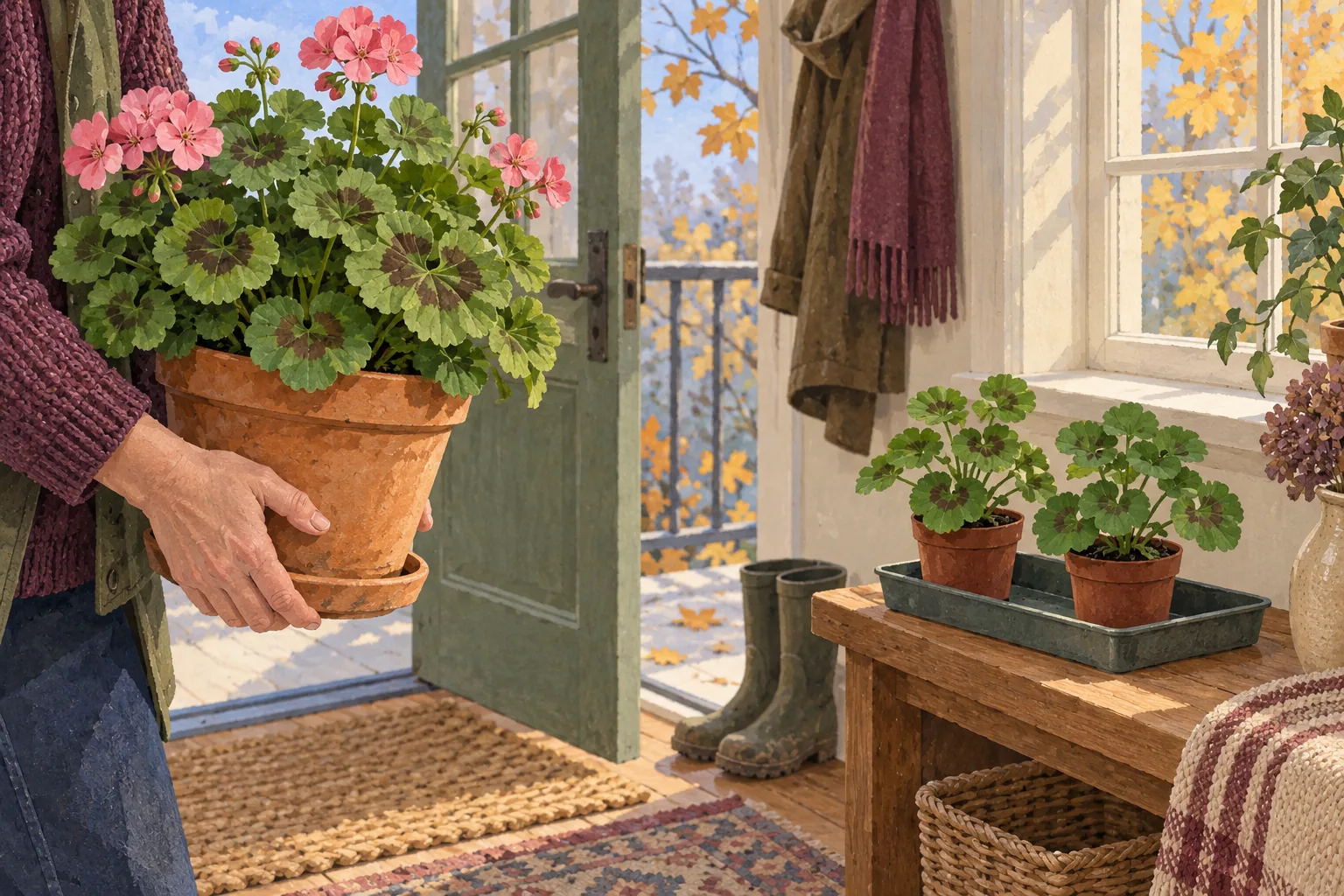
It is hard to say goodbye to a pelargonium that has filled the balcony with colour all summer. A favourite plant has its familiar spot and a little history of its own. You can keep it for spring as a potted plant or as cuttings rooted in advance. Start before the first frost, while healthy shoots and preparation time are still available.
This guide is about zonal pelargoniums, often called geraniums at home. Hardy garden plants in the genus Geranium are different, and regal and ivy-leaved pelargoniums have their own overwintering needs too.
Make room for the plants you want to keep
One established plant takes up part of a windowsill; several small cuttings need less space. All of them still need light. Imagine the pots already in place: is there room near the glass, does a curtain cover the leaves, and can you reach them easily for watering?
If there is a bright place, you can keep the favourite plant in its pot. If the whole collection will not fit, cuttings let you keep selected plants in a smaller space. Root the cuttings before the cold arrives, then give them a bright place indoors too.
From the balcony to the window
Before bringing plants inside, look closely at both sides of the leaves, the shoots and the soil surface. After a summer outdoors, it is a good moment to notice insects, deposits or damaged areas that were easy to miss among the flowers. Keep a suspect plant apart from the indoor collection while you work out the cause.
A pelargonium growing in a garden bed is lifted before frost and placed in a suitable pot. The container needs room for the roots and drainage for excess water. For a plant already in a pot, choosing the place and checking its condition matter more than repotting simply because a certain date has arrived.
A short label helps too. “Pink one from the balcony” or a cultivar name will jog your memory in spring. A photograph before the move keeps a record of the summer plant for comparison.
Light and temperature belong together
For a pelargonium that continues growing in a pot, choose a bright window or supplemental light. A daytime guide for this method is about 18–21°C (65–70°F), with slightly cooler nights. This plant spends winter with its leaves, so both light and a suitable temperature matter.
Temperatures beside the glass may differ from those in the room, especially at night. Check the brightest position for cold too, and keep leaves away from frosty glass.
The winter lighting guide helps with choosing and positioning a lamp if the window is too dim. A reading at leaf height shows how its light is shared between the pots.
When the winter plant needs water
In summer, the watering can may be close at hand every day. In winter, that familiar rhythm can be misleading: conditions have changed, and the pot may dry differently.
For a growing potted pelargonium, use a dry soil surface as your cue. Look and feel before deciding to water. Excess water needs to drain away, rather than remain around the roots because of blocked holes or an overfilled saucer.
Choose a familiar day for a brief visit: check the leaves, feel the soil and empty any water left in the saucer. Bring the watering can when the soil surface has dried.
Keeping cuttings instead
Choose healthy shoot tips about 8–10 cm (3–4 inches) long. Take the cutting with a clean, sharp tool and remove the lower leaves. Place it in a light rooting medium, such as a perlite-and-peat mixture, in a container with drainage holes.
The shoot should support itself in the medium, with leaves above it. After moistening the medium, let excess water drain. Choose bright indirect light away from direct sun. Then pay attention to the cutting and moisture in the medium: rooting follows the plant's progress rather than a calendar date.
Once a good root system has developed, the young pelargonium can move into its own pot in a sunny window or under a lamp. Keeping a few chosen plants in good positions can make winter care more enjoyable than squeezing the whole collection onto a crowded sill.
By spring you will have the plants and a short account of their winter: when they came inside, where they stood and what you changed. Those notes make it easier to decide which method suits your home.