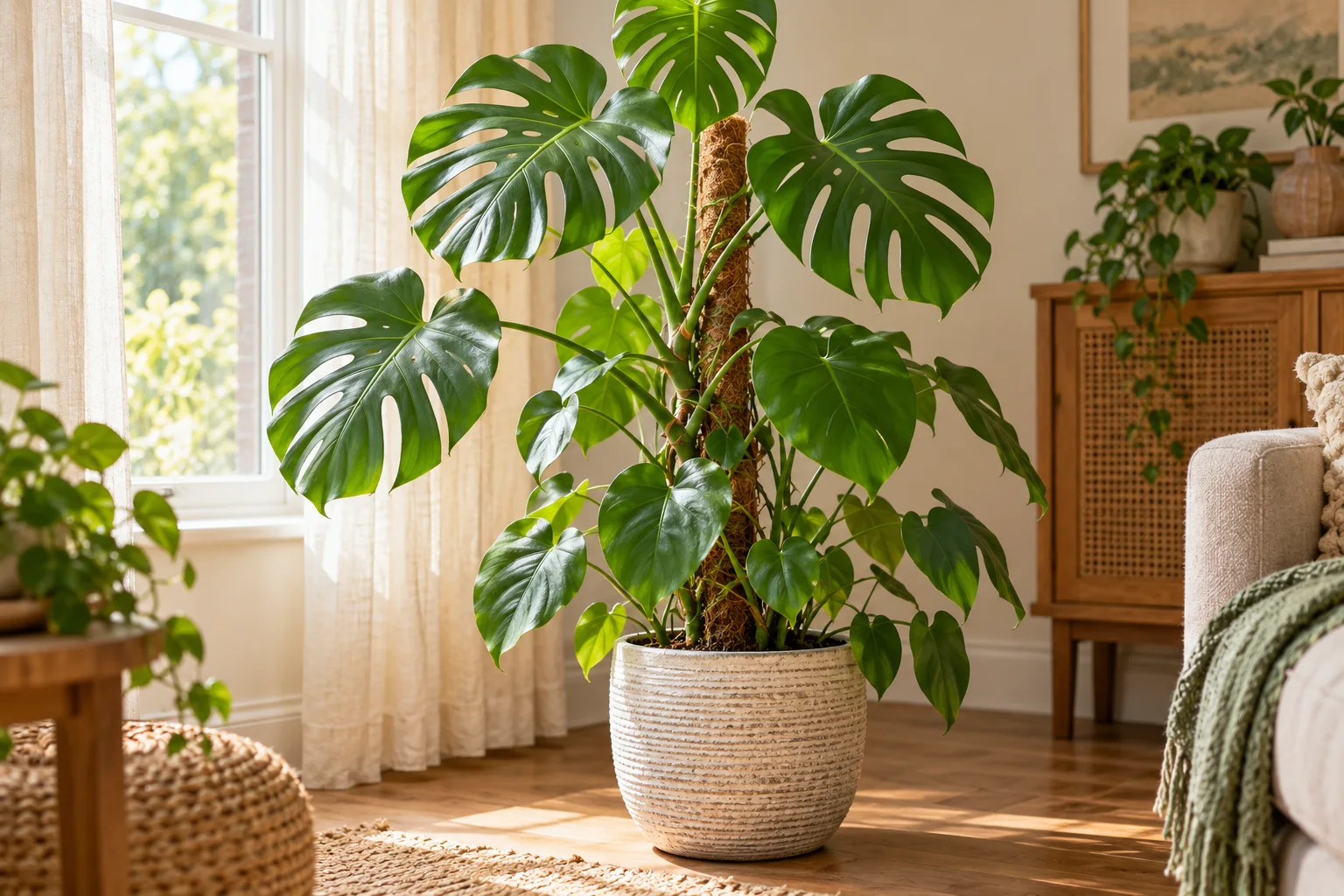
Waiting for a new monstera leaf to open is part of the pleasure of keeping one. Yesterday it was a tightly rolled green tube; today the glossy blade is beginning to spread. And there it is again: a whole, heart-shaped leaf. Where are the lovely splits that first made you bring this plant home?
Whole leaves are normal on a young Monstera deliciosa. The familiar divided shape develops as the plant matures. If an established vine is still producing small, simple leaves, look at its light and its opportunity to climb. Those give you a practical starting point, followed by a little attention to the new growth.
A small monstera is still changing
The modest plant in a shop and the enormous-leaved vine in a photograph may be the same species at different stages. Young deliciosa leaves often have an unbroken edge. As the plant develops, its leaves can acquire both cuts along the margin and openings within the blade.
Start by checking the name on the label and looking at the whole plant. This guide is about deliciosa; leaf shape and development can differ in other species. Your small plant's own history makes a more useful comparison than a monstera that already occupies half of someone else's sitting room.
After pruning, new shoots may also begin with smaller, less divided leaves. Watch how that shoot develops before changing every part of its care at once.
Look at the light where the leaves are
A room can feel bright while the plant behind the sofa or a heavy curtain receives relatively little light. The difference can become more noticeable in winter. If the leaf stalks are stretching and new leaves are small and lack splits, begin with the plant's position near the window.
Deliciosa suits bright, filtered light. A sheer curtain can soften strong direct sun at a window; hot summer sunshine can scorch the foliage. Choose a position where light reaches the vine itself, rather than only the neighbouring windowsill.
If two positions are difficult to compare by eye, try a simple measurement at leaf level. With a grow light, look at which leaves actually sit within its coverage. An attractive fixture above the top of the plant can leave much of the lower growth shaded.
Give the vine somewhere to climb
A monstera has a stem that grows upwards over time and aerial roots that help it attach to a support. Indoors, a moss-covered pole can provide that support, holding the heavy vine upright and offering a surface for its roots to grip. Keep the moss moist if you want the roots to grow into it.
As the plant establishes its climbing growth, it will often produce larger, more mature leaves with more splits and holes. Guide the stem along its support gradually, leaving the leaves room to open. Wear gloves when handling the plant, as its sap can irritate skin.
Support and suitable light work together. It helps to picture where the growing tip will be as the vine gets taller, and whether light will still reach it there.
The next leaves tell the story
The openings begin forming while a leaf is still developing. A whole leaf that has already opened will not acquire natural splits because you move the pot. Look at the next growth when judging a change in conditions.
Take one photograph of the whole plant and note the date you move it or add a support. When a new leaf arrives, compare its size and shape with the previous ones. Small, steady changes are easier to see this way than during a quick daily glance.
The older green hearts can remain a lovely part of a mature vine. They are a reminder of the small plant it once was.