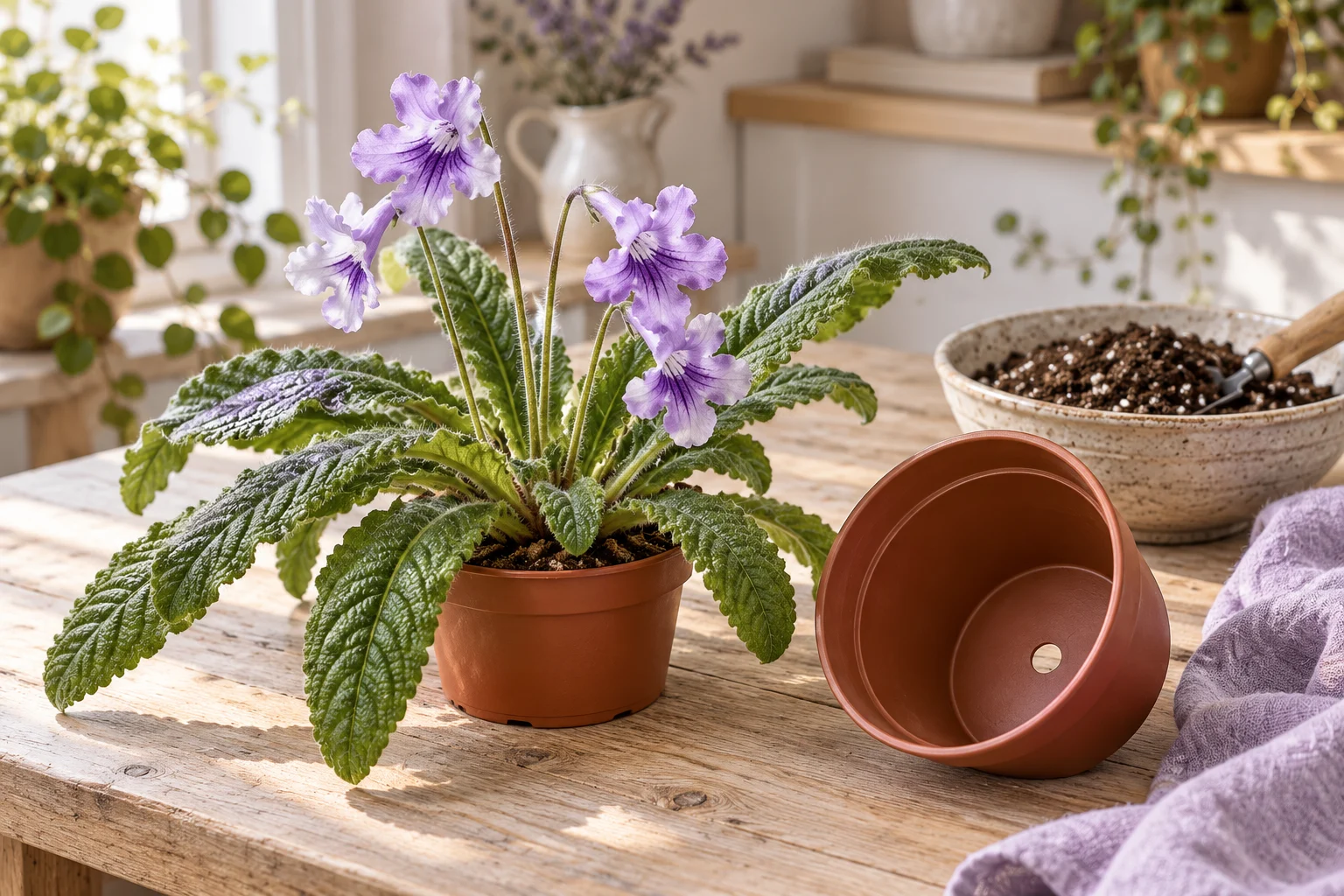
A Cape primrose can hide its pot beneath a generous spread of leaves. Flowers sway above the greenery, while the rim of the container all but disappears. When repotting time comes, a roomier pot looks tempting: surely that lovely plant could use a little space.
For a typical indoor rosette Cape primrose with long leaves, a broad, shallow pot with drainage holes is a useful choice. Increase the size gradually when repotting is needed. The rootball and the previous container offer a better starting point than the impressive spread of foliage.
Start with the pot you know
For plants grown with an ordinary seasonal pattern, spring is a useful time to plan repotting. When you are ready to repot, look at how the roots have occupied the old container. That gives you something practical to compare with the next pot.
If your plant is healthy and does not yet need repotting, you can simply look for a suitable container in advance. There is no need to lift it out for every check. Note the size of its present pot, or photograph the container beside a ruler. That small reference can be surprisingly helpful in a shop.
One modest step wider
Place the old pot beside the next size up. Look for a small increase, preferably in a broad, shallow shape. A much larger, deeper container surrounds a modest rootball with plenty of fresh mix. That extra mix can remain wet for longer, reducing the air around the roots.
A young rooted plantlet and an established leafy plant reach the next stage at different speeds. Someone else's successful pot volume describes their particular plant. For yours, compare the rootball, its old pot and the proposed new container. Pots with the same volume can have quite different shapes too.
Check the drainage holes. If you enjoy decorative outer pots, keep the plant in a separate inner container that is easy to lift out and drain. After watering, check the bottom of the outer pot so the roots are not left standing in collected water.
Get to know watering again after repotting
A small, freshly potted plant and a mature Cape primrose with a large leaf area use water differently. Spend a little time noticing how the surface of the mix dries before watering again. An interval that suited the previous container may need to change in the new one.
A drooping leaf is also a reason to check moisture first. Leaves can lose firmness with too little water or with too much. If the mix remains wet for a long time, another watering adds to the difficulty.
If the leaves have become noticeably larger while flowers are scarce, take a separate look at the light reaching the plant. Leaf size alone is too little reason to move straight into a bigger pot.
In time, a well-chosen container becomes a quiet part of the routine: easy to lift, turn, drain and return to its place. The spreading leaves and light, dancing flowers can take centre stage again.