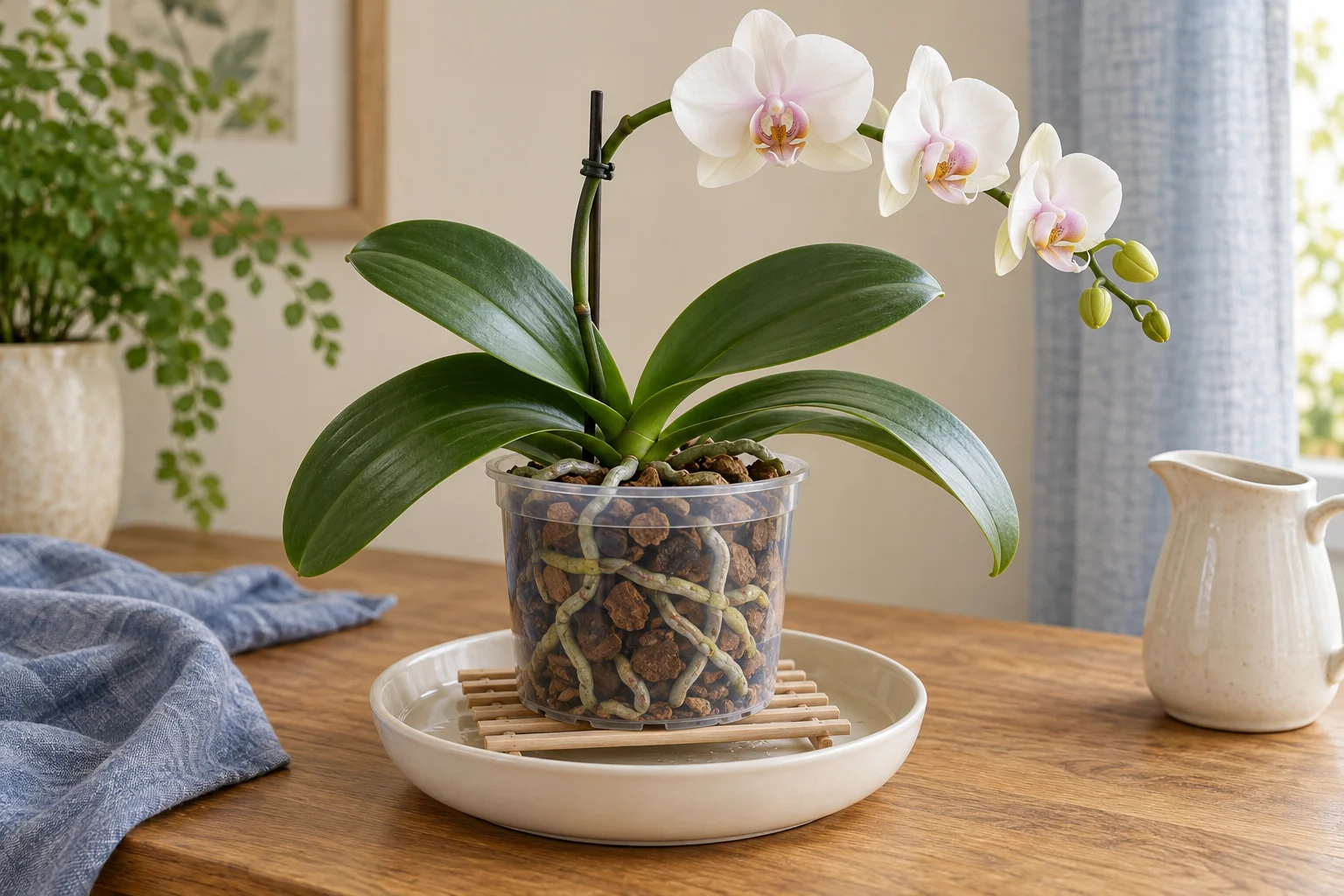
A flowering Phalaenopsis draws the eye straight to its blooms: rounded petals, a gently arching stem, the next bud waiting to open. A little lower, another part of the plant is busy. Thick roots wind around pieces of bark, reach outside the pot and change shade after watering. Clear walls offer a closer view of that quieter life.
A typical indoor moth orchid in loose bark needs water followed by drainage, with air around its roots. The pot itself offers clues about the next watering. A few calm observations are more useful than an appointment with water every Saturday.
Look below the flowers first
Lift the clear nursery pot out of its decorative container and look at the bark inside. Moist mix deeper down does not need more water just because the top pieces look dry. When the pot is nearly dry, it is time to water. Avoid leaving a Phalaenopsis completely dry for a prolonged period.
Roots add another clue. Silvery or whitish aerial roots may turn green after wetting. Watching the same plant makes that change easier to recognise. Dry roots above the pot do not tell you how much moisture remains deeper in the bark.
Notice the weight too. After watering and draining, the pot feels heavier. As it dries, your hand begins to recognise the difference. Over time, the bark, the roots and the weight give a fuller picture together.
Take your time with the water
Morning watering allows stray droplets time to dry. Take the inner pot to the sink or a suitable draining container. Use tepid water rather than a sudden cold drench.
Water the bark gently, keeping water away from the centre of the rosette and the leaf bases. It should pass through the medium and run freely out of the drainage holes. Wet the bark evenly; if water rushes through one small area, gently water another part of the mix as well.
Then let the pot drain. Return it to its decorative container once excess water has run out, and check the bottom of that outer container. Roots should not stand in leftover water. Keep water from collecting in the crown too.
Why the calendar changes
A pot may dry faster in a warm, dry summer room and more slowly in cool conditions with less light. Container size and the condition of the bark also matter. A regular day for checking the plant is helpful; decide whether to water when you are beside it.
To begin, note the watering date and where the pot stands. After a few checks, you will recognise a familiar state: bark that remains moist or a pot that has nearly dried. That small skill stays useful as the season changes outside.
In autumn, you can also consider whether the plant has enough light. Extra water cannot take the place of a bright position.
Roots outside the pot and changes in the bark
Healthy aerial roots can grow freely above a moth orchid’s pot. This is a normal part of its growth: in the wild, these orchids grow on trees. There is no need to cut those roots or tuck them into the bark simply to make the plant look tidy.
Bark gradually breaks down. Smaller particles accumulate, the mix becomes denser and it holds water for longer. If the contents look crumbled and drain poorly, renewing the medium needs attention. Moth orchids use a loose, bark-based orchid mix; repotting deserves its own careful approach.
Soft, breaking-down roots together with a wilting plant also call for a closer look at its condition, rather than another automatic watering. Root colour alone is too little evidence to decide that a root is dead.
Gradually, watering feels less mysterious. Lift the familiar pot, look through its walls, let the water drain and return the orchid to its place. Then your attention can drift back to the flowers that first caught your eye.