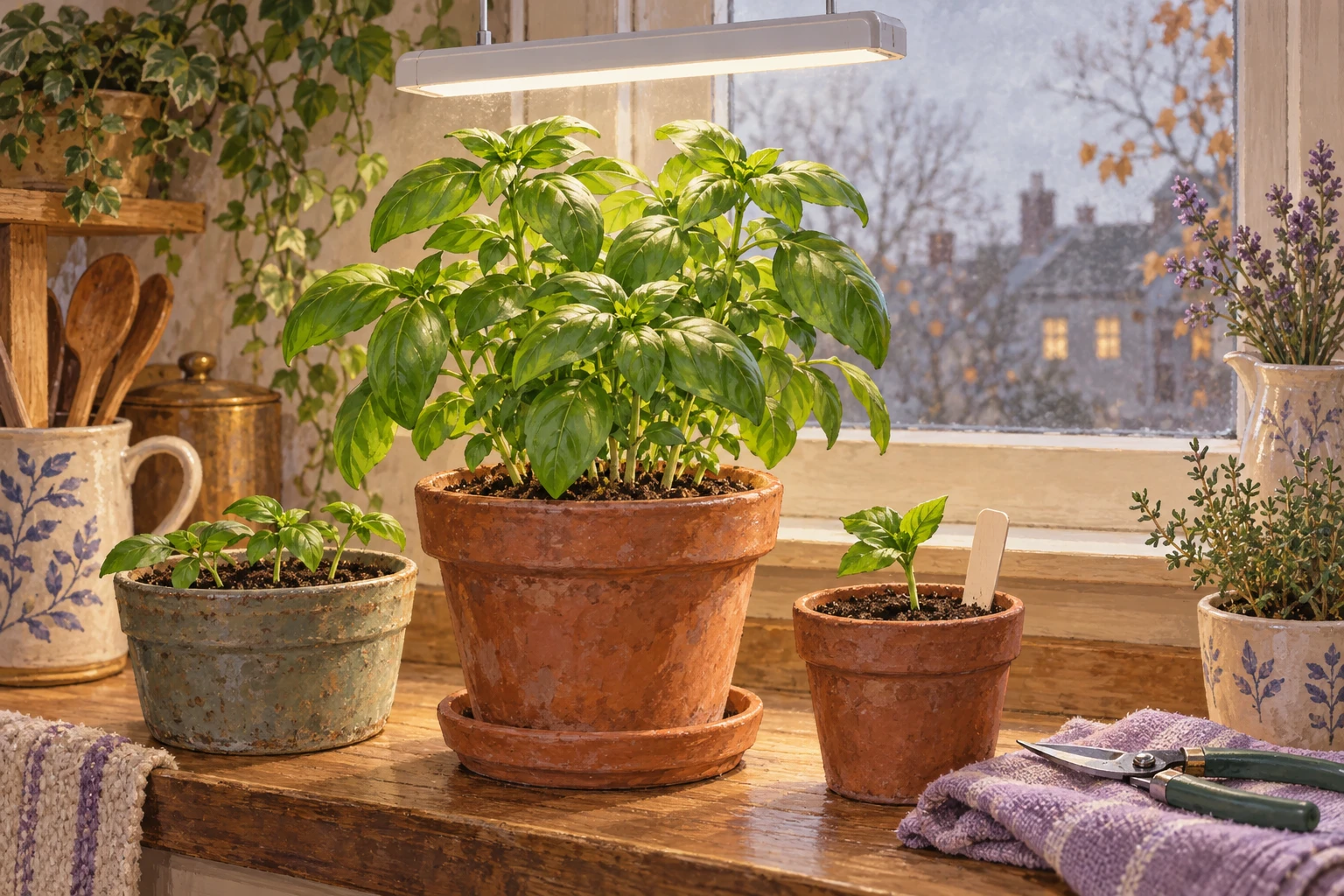
A few fresh basil leaves can change the mood of dinner. A bowl of pasta takes on a spicy aroma, a salad gains character, and a small green plant lives at the kitchen window. That small pleasure is a good reason to try growing basil through winter.
Start with seeds or a cutting from a healthy plant. Common sweet basil, Ocimum basilicum, needs warmth, bright light and a pot that lets excess water drain. Before choosing how to begin, make a comfortable place for it away from a cold, dim corner.
Find a place at the window first
Look at the windowsill in the morning and evening. A bright room can still leave the plant beside the wall short of light, and temperatures near the glass may be much lower than those at the kitchen table. Basil is sensitive to cold, so keep it away from chilly draughts and frosty glass.
A grow light is often helpful during winter. It should reach the middle of the plant and the edges where new shoots will grow. One practical guideline for indoor herbs under supplemental lighting is to run the light for 14–16 hours a day. Check the light itself alongside the schedule: a long day under a very weak lamp does not provide the same growing conditions as bright light.
Place an empty pot in the chosen spot and imagine the eventual plant. A lamp shining from one side may leave half the leaves shaded by neighbouring pots. A reading at leaf height helps compare the centre and edges before rearranging the whole shelf.
Seeds: enjoy starting from the beginning
Seeds let you choose a basil you would like to try: green or purple, with large leaves or more compact growth. Keep the name from the packet so you can remember which aroma you liked later.
Prepare a small container with drainage holes and a suitable seed-starting mix. Moisten the mix, distribute the seeds and cover them to the depth stated on the packet. Put the container somewhere warm: the growing medium on a cold windowsill can stay chilly even in a heated home.
Once seedlings appear, light becomes part of everyday care. Keep the leaves in the bright area. When true leaves develop and the seedlings begin crowding one another, thin them or move them into separate containers so each has room to grow.
This method suits anyone who enjoys watching small seedlings gradually turn into a kitchen plant. Let the plants decide the first harvesting date: varieties and growing conditions develop at different speeds.
A cutting: when healthy basil is already available
You can take a shoot tip from a growing plant. Choose a healthy leafy stem and cut it with a clean, sharp tool just below the place where a pair of leaves emerges. This point is called a node. Remove the lower leaves and keep the upper ones.
Use a light, moist rooting medium in a container with drainage. Insert the lower part of the shoot so it supports itself, keeping the leaves above the surface. Place it somewhere warm with bright indirect light. A small clear cover helps keep the air around the leaves humid while roots form. Ventilate the cover as needed. Keep the medium moist and allow excess water to drain.
Once roots develop, move the young plant into a pot with suitable growing medium and give it good light. A cutting keeps the plant you selected; seeds give you a chance to try a different variety. Both begin with the place you have prepared for basil.
Watering the small kitchen plant
Basil needs moderately moist soil with good drainage. Feel the mix before watering: when the surface begins to dry, it is time to water the basil. Water so moisture reaches the roots and the excess leaves through the holes, then empty the saucer. Keep the whole root ball from drying out completely.
Kitchen conditions change: the heating runs, a window opens, and the plant grows larger. Following the soil is more useful than assigning the same dose of water to every Tuesday. An established plant in active growth benefits from periodic feeding according to the instructions on a product suitable for edible herbs.
Pick a few leaves and leave room for growth
Begin with small harvests from a young plant. As it becomes larger, you can cut shoot tips above leaves that remain: pinching encourages branching. If you are growing basil for fresh foliage, remove developing flower heads.
Leave lower leaves and shoots to continue growing. Harvesting can become a short kitchen ritual: choose a few leaves, add them to dinner and glance at the plant and its soil. The pleasure of this little garden is how close it is, among cups of tea, cooking and ordinary things around the house.