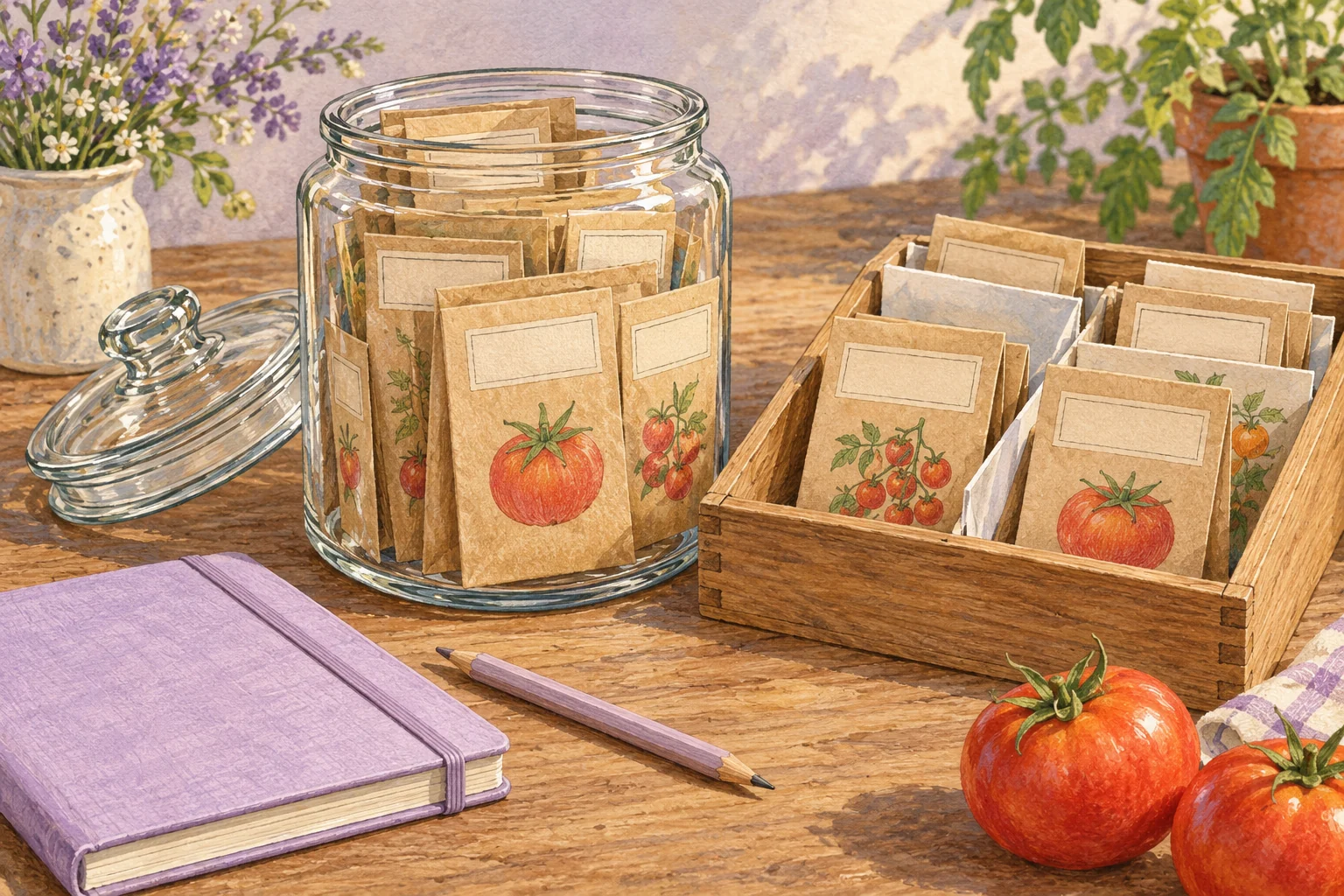
A seed box is a pleasure to open long before sowing time. Some names bring back sweet summer tomatoes; others hold the promise of a variety you have yet to try. Yet a little envelope can disappear among the colourful packets, a collection date can slip from memory, and it is easy to order seeds that are already at home.
Keep dry tomato seeds in separate, labelled batches in a cool, dry place. Paper packets keep varieties apart, while a tightly closed outer container protects them from damp air. A few envelopes, a pencil and a clean, dry jar with a lid are enough to get started.
Packets you can recognise at a glance
Keep purchased seeds in their original packets where possible. The variety name, batch details and the supplier's instructions stay with them. Fold over an opened top to keep seeds from spilling. If a packet has torn, put it inside a fresh envelope with its seeds, or copy across the details you need.
Separate paper envelopes work well for your own saved seeds. Three useful things to write on each one are:
- the exact variety name;
- the year the seeds were collected;
- where they came from, if someone shared them or you ordered them from a collector.
The year of purchase and the year of collection may be different. If the collection year is unknown, the envelope can carry the purchase date with a note explaining that. In spring, it will be clear what is known about this batch.
It also helps to keep different batches of the same variety in separate envelopes. In spring, you will know which batch you are sowing and can compare their emergence without losing track of their origins.
Envelopes inside, a close-fitting lid outside
Seeds should be fully dry before they go into a paper envelope for storage. Freshly extracted seeds that are still damp need preparation and drying first. Put them straight into a sealed jar and that moisture will stay inside.
A clean, dry glass jar with a close-fitting lid makes a useful storage container. The envelopes separate varieties and batches; the outer container limits their contact with damp air. Paper and a lid do different jobs, and work well together.
A divided tray is handy when you want to spread the collection out. Sort the varieties, choose your next sowings and return the packets to their places before putting them into their closed storage container. Drying seeds and keeping them for months are separate stages: once they are dry, protection from outside moisture matters.
A quiet place for the seed box
A cool, dry cupboard away from radiators and direct sun is a better home than a warm windowsill or a shelf over the cooker. Look for a place where the seeds will not repeatedly become warm or damp. If a packet gives special storage instructions, follow those.
A refrigerator is another option for dry seeds, with the packets inside a tightly closed container. An open paper envelope alone does not protect them from moisture in the fridge. If you choose cold storage, take the closed jar out in advance and let it reach room temperature before opening it, so moist room air does not meet the cold seeds.
Arrange the labelled envelopes in an order that feels natural to you, perhaps alphabetically by variety. You can set aside a small group for the coming growing season. A look through that group before placing another seed order makes it much easier to see what you already have.
What about packets from previous years?
Well-stored tomato seeds can remain viable for several years. A date on an envelope alone cannot tell you whether that batch has stayed in a dry cupboard or spent a summer beside a hot window. Keep the supplier's information for purchased seeds, and record the year and storage conditions for your own.
About a month before your planned sowing, test a small sample of an older batch for germination. That leaves time to decide how many seeds to prepare and whether you need a backup supply. The result and test date on the same envelope will be there when you return to this batch next spring.
A well-kept seed box holds more than a tidy collection of packets. It becomes a small, readable history of favourite varieties: what is left, what you would like to grow again, and which tomatoes are still waiting for their first summer in your garden.